Showing posts with label Carisbrook Dunedin. Show all posts

Sunday, 19 September 2010

No gym for Colin Meads !


Meads' fitness - there has never been a fitter forward of his size - was due to his lifestyle and mental strength.

He didn't even step inside a modern gym until 1995, aged 59, although he occasionally tried weights training with his brother Stan (also an All Black lock). As for swimming, Meads would not be seen dead in a pool during the season. "It softened up and relaxed your muscles," he said. "If I was sore after a game, I'd go for a jog."


I am currently living in Colombo, Sri Lanka and happened to walk past the ground that Colin Meads played on in 1955 when he was a member of the New Zealand under 21 side which toured Ceylon (now Sri Lanka). He played all eight matches, scored three tries and was recognised by the Rugby Almanack as one of the 1955 season's most promising players

As I walked past I thought of this brilliant player who  is widely considered as  one of the greatest players in history. Nicknamed 'Pinetree', he is an icon within New Zealand rugby, and was named the country's Player of the Century at the NZRFU Awards in 1999.

Meads is so gloriously the antithesis of the model preferred by modern-day rugby gurus, and so manifestly better than almost anybody playing in the new 'scientific' era, that perhaps we should pause to ponder who is right and who is wrong. He would be a megastar in the modern game - but in an anti-hero way, driving coaches and directors of rugby insane.


Rugby legend Sir Colin Meads arrives with the Meads Cup at the start of the Heartland Championship Meads Cup Final match between Mid Canterbury and Wanganui at Rugby Park on October 31, 2009 in Christchurch, New Zealand...


He didn't even step inside a modern gym until 1995, aged 59, although he occasionally tried weights training with his brother Stan (also an All Black lock). As for swimming, Meads would not be seen dead in a pool during the season. "It softened up and relaxed your muscles," he said. "If I was sore after a game, I'd go for a jog."
Meads never bothered with warm-ups. Indeed, an old superstition meant that he wouldn't change into his kit until half an hour before kick-off. "The haka was the only warm up I needed," he said.

"The greatest athletes and performers I saw were the local sheepshearers, people like Godfrey and Ivan Bowen, the world record holders, who could shear 400 ewes or more in a nine-hour shift," he explains. "They just rolled up their sleeves and got stuck in."

Energy drinks, electrolytes, water? "Hardly ever, maybe a quarter of orange at half-time if I was lucky. I am not convinced about the need to take liquids on board." It gets better with every question. Alcohol before a game? "Never on match day, but after most training sessions with the Blacks we liked to finish with two or three beers. That included the Friday lunchtime before a Saturday Test."

Meads' fitness - there has never been a fitter forward of his size - was due to his lifestyle and mental strength. He would flog himself at training, whether at Waitete RFC, King Country or the All Blacks.

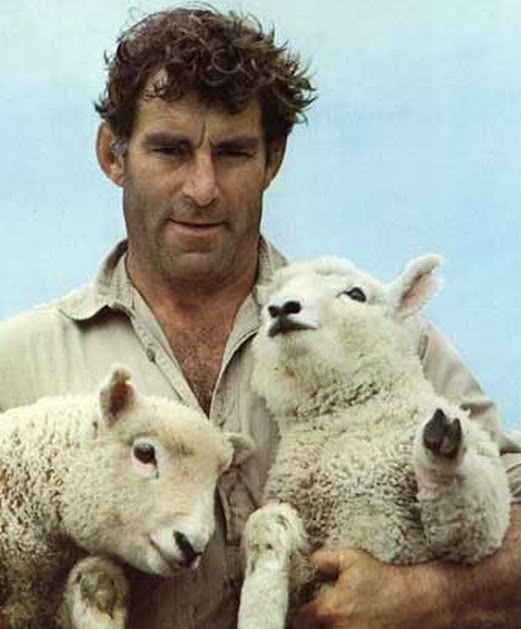
The lifestyle on his Te Kuiti farm, meanwhile, was relentlessly rugged. The legend of him running up and down hills with a sheep under each arm is a false part of rugby mythology, but he would spend long days at the dipping pen

As a schoolboy, I saw him play on Crisbrook for the All Blacks against Australia in 1964, South ASfrica in 1965 and the British Isles in 1966. Unfortunately for us young school boys in 1959, when they played the British Isles and Don Clarke's boot gave us an undeserved win by 18 to 17, Colin Meads for some reason, didn't play.  I was stunned watching Meads play on Carisbrook, and on TV, for the way he used his strength, skill and courage to dominate forward play. We stood in awe of Colin Meads

On June 3 every year, a group of otherwise sane and respectable middle-aged men in Dunedin will gather after work in a downtown pub dressed in All Black No 5 shirts. Some will also be wearing retro leather scrum caps, circa 1965, while all will be clutching a dog-eared book with messianic fervour.

The fan club of the man they call 'Pinetree' have celebrated the occasion devotedly since 1979.

Harmless fun in a rugby-mad country, but not without social significance. The faithful meet not only to honour the greatest All Black - he gained the title in a nationwide poll in 1999 - but to celebrate a different era and different values.

Meads played his first game for King Country team in 1955, at the age of 19. Scoring a try, and even a drop-goal (an unusual feat for a lock), Meads impressed in his debut match.

In 1955 Meads was selected for the New Zealand under 21 side which toured Ceylon (now Sri Lanka). He played all eight matches, scored three tries and was recognised by the Rugby Almanack as one of the 1955 season's most promising players. In 1956 Meads played in national trials and for the North Island, and in 1957 was selected for the tour of Australia. He played ten matches and made his test debut, playing both of the internationals against the Wallabies, scoring a try in the second. Although normally a lock, he played at flanker and number 8, and even wing (from where he scored a try), as the All Black team was strong on locks.


From 1957 until 1971 Meads was effectively an automatic All Black selection. The International Rugby Hall of Fame considers him to have been 'the most famous forward in world rugby throughout the 1960s'.[4] His strength and high threshold for pain became legendary — best illustrated when in a game against Eastern Transvaal in South Africa, in which he emerged from a particularly vicious ruck with his arm dangling horribly, with an obvious fracture, yet completed the match. When the doctor cut away his shirt and confirmed the break, Meads muttered, "At least we won the bloody game."

Meads had the reputation of being "an enforcer" and was involved in some controversial incidents. In 1967, he was sent off by Irish referee Kevin D. Kelleher for dangerous play against Scotland Murrayfield, and became only the second All Black suspended in a test match. The British Daily Telegraph newspaper said of the incident that 'For one with Meads' worldwide reputation for robust play, this was rather like sending a burglar to prison for a parking offence.' In Australia he is notorious for having ended the career of Ken Catchpole by pulling Catchpole's leg while he was pinned down, causing him serious injury.[6]

He captained the All Blacks a number of times - though never a regular captain, he holds the record[of longest period of captaincy (not consecutive games), from the first date (1960) he was appointed captain to the last match he captained (1971).

Colin Earl Meads was born to Vere Meads and Ida Meads (née Gray) on 3 June 1936, in the village of Cambridge in the Waikato region. His father Vere was a descendant of early settlers Joseph Meads and Ann Meads (née Coates), who emigrated to New Zealand from England in 1842. Vere’s grandfather Zachariah Meads was among the first British children to be born in Te Aro, Wellington, in 1843, and his grandmother Elizabeth Meads (née Lazare) was the daughter of an Irish minister who had educated freed slaves on the island of Mauritius before emigrating to Wanganui.

He and  his wife Vere raised their three children on a sheep farm near Te Kuiti. Meads credits the farming lifestyle for his strong physique and high level of fitness. Meads' brother Stanley Meads was also a noted rugby player, playing 30 matches as an All Black. In 11 matches Stanley and Colin locked the All Black scrum.

Last Saturday was "Old Timers" rugby reunion day inWellington and Barry Donovan told a great yarn about Colin "Pinetree" Meads, known in some more formal circles – but not in the King Country, I imagine – as Sir Colin.
The last time I spoke with Pinetree was at Melbourne Airport at the ridiculously early hour of 6.30am on the Sunday morning after the All Blacks thrashed the Wallabies the night before. I thought I recognised the rugged head and torso sitting behind me in the cafe and, as I'd played against him in one memorable game, went across and said: "Excuse me, but aren't you Colin Meads?"


The tough old campaigner lifted his gaze and – fortunately, for he could have said a number of things after a celebratory night – replied: "Yeah." So I quickly responded:


"Colin Meads – you're a legend!"

The last time I'd exchanged a few words with the living legend was after a game between a Wellington XV and the Meads-led King Country at Taumarunui in the mid 60s. The King Country crew were very annoyed that Wellington had not sent its No1 side but had sent basically a side consisting of promising younger players and a few old stagers.


The fired-up home team ran away with the first half and it was only during the second half that Wellington regained some respectability, but still lost.


But my biggest single memory of the game was when Pinetree took off from a lineout in the move that the world's inside backs feared most – a stampeding Colin Meads with ball in hand heading straight for you.


What does an 11-stone first-five do, apart from pray for survival and deliverance from any rugby gods favouring little blokes? I decided that rushing at Pinetree's knees head-on would be completely suicidal so instead I dived at the ground in front of him hoping the big bugger would trip over me somehow.


And it worked! As Meads half stumbled over a prostrate Donovan the other Wellington backs all climbed aboard him and yes – just like a falling pinetree – the King Country icon staggered a few more yards and fell – crash.


I FELT a little foolish after the game but went and shook hands with the mighty man in his changing shed where he kindly said that they had the fastest loose forward around but he still hadn't been able to get a hand on me. Thanks, Sir Colin.


Moving on to Sunday, August 1 last month at Melbourne Airport, Colin Meads and I had an engaging chat about the previous night's test match, which had included the controversial sending off of Wallabies' winger Drew Mitchell, reducing the home team to the absurd position of playing one short against the best rugby team in the world.


Naturally I had to refer to the "man of the match", All Blacks captain Richie McCaw, who had played yet another blinder and must be worth at least 10 points to his side through leadership by example alone. In some amazement, with a shaking of the head, Colin Meads replied that McCaw "just keeps getting faster".


Obviously there were memories of some of his 1960s comrades slowing down as time went by.


When talk turned to the unfortunate imbalance of 14 against 15, particularly in an international test match, and the regrettable rugby rule of a referee sending off a player for a second offence, my mind suddenly turned to another unforgettable rugby occasion where both Colin Meads and I had been involved.


It was late 1967 and the final UK test match against Scotland at Murrayfield. I was covering the game and providing a commentary for the newly established Dominion Sunday Times. Because of the time difference, I had to make a telephone call to Wellington at 2.30am, NZ time, and no later as the edition was ready to roll.


To make matters worse, all the phone lines in the Murrayfield press box had been taken up by the major British dailies and I had to arrange to make my call from a public box just outside the ground. The All Blacks established an early dominance and were never really threatened but the game was delayed occasionally and I was forced to head for the outside phone box with five minutes to go.


AS I approached the box a mighty roar went up from the Murrayfield crowd but I thought that even if Scotland had scored the All Blacks would still win. I rang straight through to Wellington and to my amazement the editor said: "What did Meads do? What did he do?"


"What did Meads do?" was my bewildered reply.


"Yeah, why did the ref send him off?"


Colin Meads was just the second All Black to be sent off in Britain after Cyril Brownlie in 1924 against England and I had been running to a bloody Scottish phone box and missed it! Good God!


A benevolent editor (Jack Kelleher) did accept my pathetic timing and public phone box excuse and allowed me to cover the All Blacks winning match against the Barbarians back in London which gave them the "grand slam" but it was one of those agonising newspaper reporting moments you definitely never want repeated.


Just as this unforgettable memory flashed through my mind, the Melbourne Airport waitress called out "two toasted sandwiches ready and waiting". Pinetree snapped to attention, mentioning that he was feeling slightly poorly after a big night, and some early morning tucker wouldn't go astray.


Standing up, the mighty Meads still looked as formidable as ever and you certainly wouldn't want to get between him and two toasted sandwiches. I forgot about Murrayfield, thanked him for his time, and left him to knock over breakfast.


Thanks to  Brendan Gallagher of the Telegrapgh, UK for some of his statitics and interviews he had with Colin and for the Dominion Post's permission to use excerpts from Barry Donovan's articl.


Saturday, 19 June 2010

Goodbye Carisbrook.

It was a night of nostalgia at Carisbrook, Dunedin as the All Blacks beat Wales 42 - 9. The finale for this gracious old ground was an aggressive, rugged and bruising game of rugby in the first half, with the All Blacks leading 15-9. But the All Blacks were too strong in the second half, and gave Carisbrook a send off she deserved..

Wales winger Leigh Halfpenny loses the ball as he is tackled by All Blacks first-five Daniel Carter in the last test match at Carisbrook. 

Carisbrook is my ground. I was born on a hill overlooking Carisbrook in Dunedin, and watched the All Blacks play the mighty 1956 Springboks when the late Ron Jarden scored an intercept try for the All Blacks to clinch a 10-6 win  in the first test of the tumultuous series of 1956.


It's just a rugby ground – bricks and mortar surrounding a rectangular piece of grass. Well past its best, too, rickety, rusty and ready to be put out to pasture in favour of a brand spanking new piece of modern technology.

SETTING SUN: The sun sets on Carisbrook during a 2008 Super 14 game between the Lions and the Highlanders.  My family lived for 43 years in a house on the skyline to the right of the tower in the top right corner of the photo.


I was there is 1959 when Otago beat the Lions 26-8 and some weeks later saw Don Clarke kick 18 points for a victory over the Lions and the Evening Star headline screamed: Clarke 18, Lions 17.

From Mum and Dad's bedroom window I could see Carisbrook, and if 1 walked 50 metres to Benfell's garage, I could watch a test match from there.

I remember the day in 1960 I played a match for Otago schoolboys against Southland, in front of my grandfather, and felt so proud.

I could run from my house down the hill to Carisbrook in less than 10 minutes. I met most of the visiting test rugby and cricket teams in the late 50s and 60's. Perhaps my fondest memory was in 1959 meeting that great Irish winger, Tony O'Reilly a few days before the first test at Carisbrook.

It's 102 years since the Anglo-Welsh played the first test at the ground and it's perhaps fitting that the Welsh - blood-brothers of New Zealand in rugby - should play the last.

But there's something about Carisbrook, the iconic international rugby ground situated in working class south Dunedin, that has always evoked a certain charm, a certain aura.

Whether it's been the heavy student presence on the sweeping terrace or the trademark warm southern charm, this is a ground that has usually produced a pretty special atmosphere and, for the most part, been somewhat of a fortress for the All Blacks over 102 years of tst rugby.

New Zealand's finest have played 36 tests there – not counting the unofficial international against Argentina in 1979 – and won 30 of them, with just the one draw, 9-9 against the British and Irish Lions back in 1950.

Two of the five defeats have come against the Lions (1930 and '71), while Australia (2001), South Africa ('08) and France ('09) have also blotted the All Black copybook at their southernmost test venue.

The first ever test was 1908's 32-5 victory over the touring Lions, while arguably the most famous was the 18-17 win over the Lions in 1959 where Don ‘The Boot' Clarke landed six penalty goals to send 41,500 spectators home in a state of delirium.

Carisbrook began its days as a cricket ground in the 1870s - indeed its name is derived from a local cricket club.

Floodlit since the 1990s, it can cater for both day and night fixtures. Known locally simply as "The Brook", it is also often known around the world by the name "The House of Pain", due to its solid reputation as a difficult venue for visiting teams.

Located at the foot of The Glen, a steep valley, the ground is flanked by the South Island Main Trunk Railway and the Hillside Railway Workshops, two miles southwest of Dunedin city centre in the suburb of Caversham. State Highway 1 also runs close to the northern perimeter of the ground.

Some grounds, during the height of summer, you would pray for a cooling breeze. Never at Carisbrook where, in all of its 130-odd year history, it's unlikely anyone ever basked. No test cricket could be found closer to the South Pole and some days Dunedin would do its best to bridge the meteorological gap.


Carisbrook was named after the estate of early colonial settler James Macandrew (itself named after a castle in the Isle of Wight). Developed during the 1870s, it was first used for international cricket in 1883, when Otago hosted a team from Tasmania. It has been hosting rugby union internationals since 1908 and full cricket internationals since 1955.
The greatest ocassions of all at Carisbrook have been the Otago-Southland fixtures. Soputhland currently hold the coveted Ranfurly Shield.

Peter Bush (79), the doyen of sports photographers in New Zealand, has photographed many tests at Carisbrook, after first starting as a photographer at The New Zealand Herald in 1948.  His memories of Carisbrook are all good, from the first test match against South Africa in 1956 to the freezing British Lions test in 1983.

"I remember Mark Irwin, the Otago prop, having to go off in 1956 because he had a broken collarbone or something. Those were the days when there were no replacements so he just stood on the sideline with his parka on. He wasn't retreating from the sideline. Those were great days for Otago rugby," Bush said.

The stadium is home to the Highlanders in the Super 14 and Otago in the Air New Zealand Cup. It is the former home of Otago cricket,which moved to the University Oval at Logan Park in the north of the city after the redevelopment in the early 2000s, and also of Otago United Football team in the New Zealand Football Championship, which moved to the lower-capacity Sunnyvale Park for the 2008–09 season.

But the curtain came down on this rickety old stadium, with tonight's test against Wales the final international to be played on its hallowed surface, with the new, roofed Forsyth Barr Stadium being built on prime Dunedin waterfront land, to assume responsibilities from next year's World Cup and beyond.

So what does it all mean for the All Blacks who have the honour of playing the country's final test on this ground? Not to mention the responsibility of ending a two-game losing streak – the Boks in '08 and France last year - and sending the grand old dame out in style?


If you listen to Wales' Kiwi coach Warren Gatland not that much. He wasn't too sure if the modern rugby player had any place for sentimentality in their professional ethos, and that they "didn't care what happened 50 or 100 years ago".

But speaking to the All Blacks in Dunedin this week as they prepared for this historic occasion, there was no doubting how much the Carisbrook factor was playing on their minds.

Here's what our All Blacks had to say about the honour of playing the final test on one of the great international grounds:

Dan Carter: "There's some real history behind Carisbrook. We haven't been too successful the last couple of games and we want to turn that round and win well for the people of Dunedin."

Israel Dagg: "It's a pretty cool ground, it's been around for a while and hopefilly we can send it off on a winning note."

Kieran Read: "It's something we really have to do right. There's a lot of tradition there, it's going to be a great atmosphere and hopefully we send it off in the right way."

Brad Thorn: "This is personal for me, probably a little bit emotional. This is where it all started for me, I've got a lot of family down here, and this is Carisbrook. It's what Dad used to talk about when I was a kid."

Conrad Smith: "It's pretty special, and I think everyone is aware of it. We went to the Gardies [pub] on Tuesday night, and the guys are aware of significant icons that are leaving fine cities round here."

The 1971 Lions playing at Carisbrook

Jimmy Cowan: "You just want to bless it on the right note. It's been disappointing the last two years when we haven't fronted for them. So the onus is on us to send it off the right way."

Richard Kahui: "It's special, it's been around forever and the All Blacks have always had a good record here bar the last two games. I played for the Highlanders here in 2006, and it became the first place I played pro rugby and was a launching pad to where I am now. I just hope we get the lively crowd you expect here for the last hurrah."

Richie McCaw: "I guess there are a few memories watching games while at school down here. It's always a wee bit sad when it's the last game somewhere, but that's the way it is and that new place will be pretty good too."

Graham Henry: "It's a great ground, marvellous surface, and there have been many fabulous games played there by both Otago and the All Blacks. We'd like to leave that ground with fond memories, and I'm sure the ground would like to close with fond memories."

Wayne Smith: "My most graphic memory was the Lions in '83 when it was either hailing or snowing, it was bloody cold, and we had a North-South match here that was the same. We've had some really good occasions here with Canterbury and of course the Crusaders in '99 winning the final down here. It's like an old gentleman of New Zealand rugby, isn't it?"

Victor Vito: "Any test you play at home is special, but especially at Carisbrook which is a fine historical place."

Warren Gatland (Wales coach and former All Black): "We're honoured to be part of history here. As a player I know how difficult it was to come here and get a performance when you were playing Otago. It's not the easiest place in the world to come and get a result."

 "The Scotsman's Grandstand"

The ground's current capacity is around 29,000, but has hosted crowds as high as 42,000 in the past. Until recent years, the sides of a major road overlooking the ground were known as the "Scotsman's Grandstand", from which a free view of the action could be easily obtained. At one time trains would slow to a crawl or stop on the track above the stadium allowing passengers on the train to watch an entire event; other fans would sit on the hill. This was until 1998 when development of a new stand and corporate boxes on that side of the ground blocked the view, rendering this tradition a thing of the past.

We'll remember Carisbrook particularly for the afternoon tests: the smoke from thousands of cigarettes drifting across the ground, the chants and the roar of the crowd, the heroes whose deeds on the green sward enraptured us in the winter months.

We'll never forget because, as long as the game is played in New Zealand, Carisbrook will be an integral part of the All Black test story. But I will remember Carisbrook for her diversity for I have seen the Indian Hockey team play here after their victory at the  Melbourne Olympics, great athletes such as Murray Halberg, Neville Scott, John Landy and Merv Lincoln run the 'Fesitval Mile', cricket greats such as Bert Sutcliffe, Ken Barrington, David Shepherd, John Reid and Glann Turner, Frank Cameron and Alec Moir play on her hallowed turf, and pipe bands, marching girls and acrobats giving displays.

When the last game of rugby finished tonight, pipe bands came on the ground as the All Blacks did a farewell lap. A helicopter landed on  Carisbrook ground as the 30,000 capacity crowd, many with tears in their eyes, farewelled the famous venue after the last rugby test was played there tonight after 102 years, a piece of the Carisbrook turf was collected by helicopter and taken away to the new $200 million stadium now under construction on Anzac Avenue and hopefully to be completed in time for the Rugby World Cup next year.


As the crowd cheered, the beer and whiskey flowed, and the pipe band played Auld Lang Syne

Should auld acquaintance be forgot,


And never brought to mind

Should auld acquaintance be forgot,

And auld lang syne!