We arrived in Vavuniya this afternoon, Zafran and I, where we have established headquarters for Red Cross Post Conflict Recovery Programme which comprises the Sri Lanka Red Cross Society implementing, supported by the IFRC, German, Canadian, Norwegian, Australian and Japanese Red Cross, plus a number of multi-lateral donors.

On arrival I met Dr. Mahesh Gunersekera who heads our programme. A veteran of missions in Pakistan, Sudan, regional health coordinator for South Asia, he joined Red Cross when the Tsunami hit his homeland, Sr Lanka.
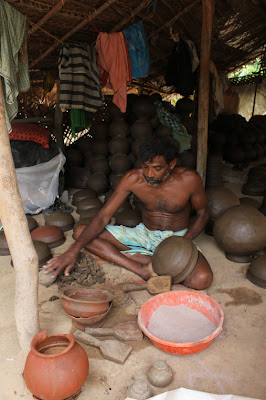 He told me how he met our good friend in Vivekanandanagar, Arunachalam. yesterday. He is 51 years old and the village potter. I first visited Arunachalam in June last year when he and fellow villavgers had nothing but tarpaulins and a few sheets of iron they called home. They had just returned after many years of bloody conflict to their ancestral village and were determined to build a new village on their land. Tissa Abeywickrama the DG of SLRCS and I presneted them certificates telling them they would receive the first funds for their owner driven housing programmethe next day, and\\\but they were somewhat sceptical, having been the recepients of so many broken promises.
Yesterday Mahesh visited Vivekanandanagar and nearly all the 300 houses are completed, all funded by Red Cross. Arunachalam proudly showed Dr. Mahesh his house. As they sat down to have a chat about the future, Mahesh took out his computer and showed him photos of his old make-shift shelter and the various stages of comstruction that is recored on our data base. Arunachalam, looked at them, then wept. It brought back memories of his son killed in the war, his struggle to set up a temporary shelter, and to make a potter's wheel to eke out a living. To see Arunachalam's story, watch this video about his last few years of agony and hope,
http://www.youtube.com/watch?v=x6jvnIwqPIc&feature=player_embedded

(Left) Dr. Mahesh (r) and I having a talk about the IDP recovery
 In October last year you could see the old bamboo framework in the foreground which was the rough temporary shelter, and behind the permanent Red Cross house coming up. Photo: Bob McKerrow
VOLUNTEERS IN ACTION PROGRAMME.
One of the aims of my visit was to see the volunteer programme which is building up Red Cross branches in areas devastated by 30 years of conflict. The programmes also involves the communities we are working with in building houses, water and sanitation, livelihoods, DP and health.The courses started on Monday in Kilinochchi and will finish over the weekend..
We at the Red Cross have had an opportunity and a mandate to assist this nation in achieving this goal. Governed by our fundamental principles, Strategy 2020 and the SLRCS’ Strategic Plan, we can assist communities to strengthen themselves by providing them with the tools necessary for the development that is so desperately needed.
This is what the Volunteers in Action (VIA) programme is designed to achieve. Taking a holistic view of the community and recognising the complexity of the needs of the people within it, the initiative seeks to build a group of multi-skilled volunteers who will be capable of meeting the physical and emotional needs of the beneficiaries they serve. The driving force of the programme is the fundamental belief that that a community is the fabric of a nation and that the resilience and success of either is both mutually beneficial and inter-dependent.
The Post Conflict Recovery Programme (PCRP) aims to facilitate a return to normality for the returning IDP families and set up more resilient communities within their original areas of residence. This owner driven and integrated programme seeks to achieve its goal through the repair and construction of permanent housing and by delivering software activities to this area of the country which remains in great need of development. The establishment of the branch interim committees in Kilinochchi and Mulaittivu districts and the focus on re-establishing the volunteer networks in these areas means that it is now possible to begin the software components of the programme – making PCRP the perfect vehicle for the VIA programme.
Photographs below are of the progrsammes we are conducting this week in Kilinochchi, northern Sri Lanka.
 Kilinochchi. Villagers from Krishnapuram developing a Community Action Plan

 While parents are developing plans children are playing
 Livelihood workshop for the villagers from Vivekanandanagar
 People who participated in Red Cross assisstance programmes discussing in groups about their livelihoods
 Villagers from Krisnapuram debating on common needs of their village.
Off early tomorrow morning to Kilinochchi. I love this programme as it is almost perfect and we have been able to put into practice, lessons learned from tsunami, especially owner driven housing and integrated programming.

On arrival I met Dr. Mahesh Gunersekera who heads our programme. A veteran of missions in Pakistan, Sudan, regional health coordinator for South Asia, he joined Red Cross when the Tsunami hit his homeland, Sr Lanka.

Yesterday Mahesh visited Vivekanandanagar and nearly all the 300 houses are completed, all funded by Red Cross. Arunachalam proudly showed Dr. Mahesh his house. As they sat down to have a chat about the future, Mahesh took out his computer and showed him photos of his old make-shift shelter and the various stages of comstruction that is recored on our data base. Arunachalam, looked at them, then wept. It brought back memories of his son killed in the war, his struggle to set up a temporary shelter, and to make a potter's wheel to eke out a living. To see Arunachalam's story, watch this video about his last few years of agony and hope,
http://www.youtube.com/watch?v=x6jvnIwqPIc&feature=player_embedded

(Left) Dr. Mahesh (r) and I having a talk about the IDP recovery

VOLUNTEERS IN ACTION PROGRAMME.
One of the aims of my visit was to see the volunteer programme which is building up Red Cross branches in areas devastated by 30 years of conflict. The programmes also involves the communities we are working with in building houses, water and sanitation, livelihoods, DP and health.The courses started on Monday in Kilinochchi and will finish over the weekend..
We at the Red Cross have had an opportunity and a mandate to assist this nation in achieving this goal. Governed by our fundamental principles, Strategy 2020 and the SLRCS’ Strategic Plan, we can assist communities to strengthen themselves by providing them with the tools necessary for the development that is so desperately needed.
This is what the Volunteers in Action (VIA) programme is designed to achieve. Taking a holistic view of the community and recognising the complexity of the needs of the people within it, the initiative seeks to build a group of multi-skilled volunteers who will be capable of meeting the physical and emotional needs of the beneficiaries they serve. The driving force of the programme is the fundamental belief that that a community is the fabric of a nation and that the resilience and success of either is both mutually beneficial and inter-dependent.
The Post Conflict Recovery Programme (PCRP) aims to facilitate a return to normality for the returning IDP families and set up more resilient communities within their original areas of residence. This owner driven and integrated programme seeks to achieve its goal through the repair and construction of permanent housing and by delivering software activities to this area of the country which remains in great need of development. The establishment of the branch interim committees in Kilinochchi and Mulaittivu districts and the focus on re-establishing the volunteer networks in these areas means that it is now possible to begin the software components of the programme – making PCRP the perfect vehicle for the VIA programme.
Photographs below are of the progrsammes we are conducting this week in Kilinochchi, northern Sri Lanka.


A professional facilitator supporting Kilinochchi. Villagers from Krishnapuram developing a Community Action Plan


Off early tomorrow morning to Kilinochchi. I love this programme as it is almost perfect and we have been able to put into practice, lessons learned from tsunami, especially owner driven housing and integrated programming.


