Showing posts with label climate change. Show all posts

Sunday, 5 February 2017

Eyewitness Voices: North Pole Expedition Team on Climate Change Impacts ...

I rediscovered this interview in 2011 when the eight of us from our successful 1986 North Pole Expedition where each of us spoke about the impact of climate change in the world's we individually work in, or have worked in.


Saturday, 4 February 2017

Telling our climate stories


Letter from the Executive Director

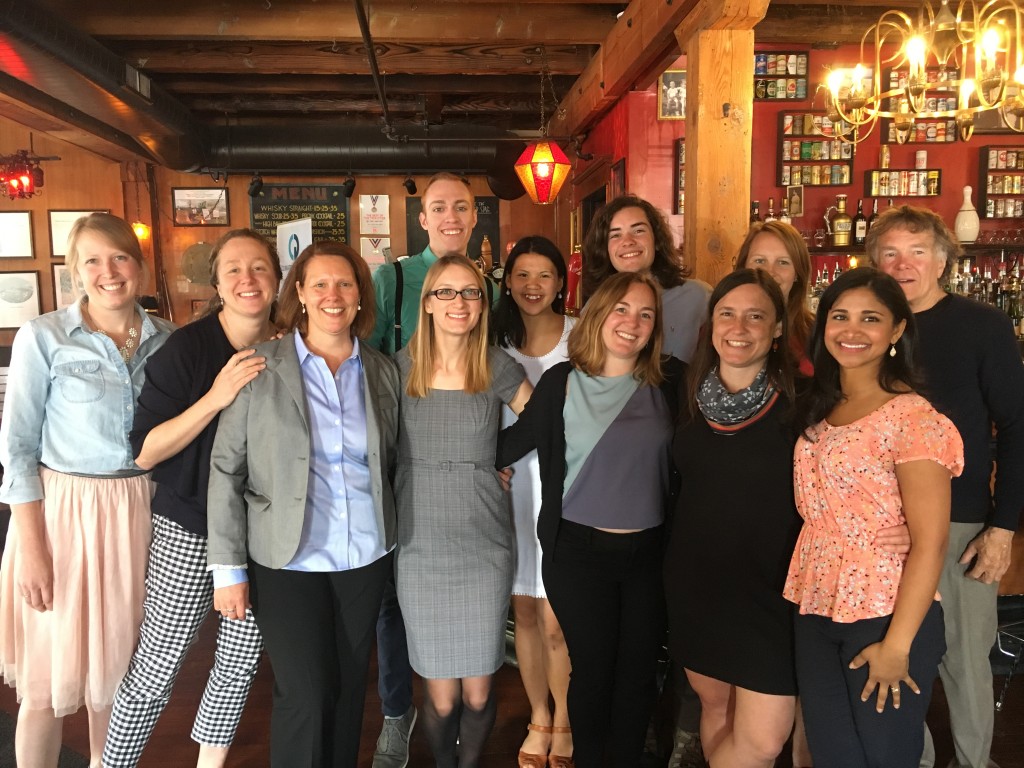
IMG_5409This month kicked off with our annual donor appreciation breakfast at Red Stag, where supporters learned through storytelling how our work has been influenced by the Paris climate agreement. Our staff’s stories brought COP21 to life again, while connecting the experience of the UN conference with our climate change programming moving forward


Together with the Minneapolis Film Society, MN350 and Food & Water Watch, we joined film director Jon Bowermaster for a screening and panel discussion of his new film Dear President Obama, featuring stories of individuals impacted by the fracking industry and the clean energy revolution that is happening now across the US.
On Saturday, May 7th, we were thrilled to have over 20 allies and supporters join us as we began the process of mapping a new strategic plan for our organization. The feedback, thoughtful insights, and energy that filled the room were truly inspiring! On behalf of our whole staff, I want to extend a heartfelt thanks to everyone who took the time to be there or filled out our survey for input.
Throughout this spring, our high school youth involved in YEA! MN are wrapping up their action projects before the end of the school year, and planning for their year-end retreat at the Steger Wilderness Center. At the same time, our education team is pulling together a robust agenda for our 11th annual Summer Institute for Climate Change Education at Macalester College, happening June 21-24.
Looking ahead to summer, we hope to see you at our Institute in June or at the Northern Spark festival on June 11, where the theme is Climate Chaos – Climate Rising. We are proud to be working with a team of architects and artists who are creating an interactive look at climate data and climate impacts through ice!
Thanks you for engaging in, sustaining and supporting our work in the ways that you can!
Sincerely,
Nicole Rom, Executive Director

Education

Past Summer Institute testimonials highlight what you can expect this year!
IMG_5278Attendees at last year’s 10th Annual Summer Institute for Climate Change Education had a lot to say about this powerful and much-needed professional development experience. You can add your testimonial to the growing ranks of Summer Institute alumni by registering and attending this year’s Institute, which is right around the corner! Here’s what past educators have had to say:
Fabulous speakers, staff, workshops, and presenters plus tasty, fresh food in a great setting – what an awesome combination!
Since I have been a teacher, there are two institutes/trainings that have made more than a lasting impression on me. This is definitely one of them. I wish the three days weren’t up, or that we could have at least one more day! This was so awesome. Thank you so much for an insightful and resource-filled week. Kudos to ALL of you who are a part of Climate Generation!

Carrying the stories of COP21 forward

It honestly wasn’t until April 22, the day the Paris Agreement was signed, that I truly felt I had returned from Paris and COP21. On Earth Day, 174 nations and the EU signed the Paris Agreement, the largest number of signatures to an international agreement in one day, ever. It was both a privilege and an honor to not only be present at COP21, where the Paris Agreement was developed and finalized, but to be present with ten education ambassadors committed to climate change education. In the past few weeks, I finally took time to look back and reflect on all the moments that made our time there memorable and transformational. There are many stories I could tell, but I think this is the one that best captures how COP21 transformed all of us who were able to attend: Kristen’s Climate Story – Landing from Paris.

Katharine Hayhoe talks changing minds on climate

During Earth Week, some of the staff attended a talk by atmospheric scientist Katharine Hayhoe, who is an associate professor at Texas Tech University, director of their Climate Science Center, and a personal climate hero for many of us. Her research focuses on how we should communicate about climate change, and how to use that dialogue to then inspire action on solutions. In her talk, she emphasized that we don’t need to share ever more facts and figures to bring people around; rather, we should respectfully connect with the other person through shared values that motivate our concern about climate change. We need to connect what we know to be true in the head to what the heart is feeling. Her talk affirmed our model of place-based climate storytelling that we used during our Climate Minnesota convenings last year. Share your climate story with us at stories@climategen.org and we’ll add it to our online collection!

Emerging Leaders

Relational organizing at work in the YEA! MN program

IMG_4889-e1463173331378-350x350Relationships are at the heart of movement building. In order to win long-term change, we need to cultivate sustaining relationships to support the long-haul work that will get us there. We need one another to weather the storms of our world and move forward our visions for our communities. This year, YEA! MN student leaders Addie Welch, Kendra Roedl and Liam DelMain have come together to intentionally navigate their relationship with the East Phillips neighborhood. The growing relationship between YEA! MN student leaders and Tamales y Bicicletas brings us to exciting work ahead of us: we’re creating momentum for environmental justice in East Phillips and more broadly among young people around the Twin Cities. Join us for two upcoming opportunities to build relationships in our local community – on Wednesday, May 18 we’re partnering with Tamales Y Bicicletas for a Toxic Tour Bike Ride of East Phillips, and on Tuesday, May 24 we will be holding an environmental justice listening session in the community. Reach out to yeamn@climategen.org with any questions.

Former YEA! MN student Becca Krasky selected as 2016 Fossil Free Fellow

13240555_10205153590874129_372048003847147379_nHave you wondered where YEA! MN students go after they graduate and leave our program? Becca Krasky joined YEA! MN as a junior at Minneapolis South High School, where she helped launch a compost competition between rival high schools and a campaign to reduce plastic bottle waste through the installation of hydration stations on campus. She traveled with us to Power Shift 2013, a national youth climate summit in Pittsburgh, PA, and upon graduation, went on to Macalester College, where she joined the student divestment group Fossil Free Macalester. This spring, Becca was accepted as a 2016 Fossil Free Fellow with 350.org. Chosen from hundreds of applicants, she will join a diverse group of 24 fossil fuel divestment campaigners from across the U.S. for 10 weeks this summer. Fellows gain hands-on experience in climate and justice-based organizing by working on projects across the U.S. with 350.org and partner organizations. Congratulations Becca!

#ActOnClimate

IMG_5296Catch MN Stories in a Changing Climate in Duluth, or schedule your own screening!

On Tuesday, June 7th, join Climate Generation at Zeitgeist Arts Cafe in Duluth for an evening of film and live storytelling! We’ll be showing the Twin Cities PBS Minnesota Stories in a Changing Climate film, followed by a storytelling panel of Duluth residents sharing their climate stories, and a reception with beer donated by Bent Paddle. If you’d like to bring Minnesota Stories in a Changing Climate to your community, neighborhood group, or office, schedule a screening here.

In the News

Renowned polar explorer tackles NWO wilderness

atikokan-progress-170x108At the end of April, our founder Will Steger returned from his annual solo expedition, where he traveled from north of the Quetico down to his homestead in Ely. He left earlier this year in hopes of catching the mid-winter cold, but travel conditions in a changing climate have become a “wild card.”

Photo of the Month

Our annual donor appreciation breakfast was fun and story-filled! Team members highlighted our effort to build and sustain the momentum of the Paris climate agreement in our programming. Thanks to all our supporters who joined us for this annual tradition!

PUBLISHED IN:
TOPIC TAGS:

Sunday, 12 May 2013

Beating wild weather in Sri Lanka


COLOMBO, 9 May 2013 (IRIN) - Planners in Sri Lanka should do more to mitigate the effects of extreme weather in order to help those most likely to be affected, experts say. 

According to Sri Lanka’s Disaster Management Centre (DMC), in 2012, 1.2 million people were affected by drought and over half a million by floods, while in early 2011, floods affected over a million and displaced more than 200,000 - a trend expected to increase in the future. 

“There is nothing to indicate that this trend will slow down. All the signs are that it will increase,” Bob McKerrow, head of delegation for the International Federation of Red Cross and Red Crescent Societies (IFRC) in Sri Lanka, told IRIN. 

In 2012, the island nation experienced two dramatic back-to-back weather events. Between January and October, the island’s Northern, Eastern, Southern and North Western regions suffered a severe drought. A mid-year forecast by the Socioeconomic and Planning Centre of the Department of Agriculture released in August 2012, when the drought was at its worst, warned of a loss of around 23 percent of the seasonal paddy harvest due by September. 

The drought was only broken by the onset of heavy rains in the first week of November, made worse by Cyclone Nilam which struck Sri Lanka and southern India on 1 November, killing 45 people, temporarily displacing 80,000 and resulting in damage to over 10,000 houses, DMC reported. 

According to an assessment by the ministries of economic development and disaster management, and the World Food Programme (WFP) in January, around 20 percent of the island’s main paddy harvest of around 2.6 million tons was lost to the floods. Of the 550,000 people affected by the floods, some 172,000 - 31 percent of surveyed flood-affected households - were severely food insecure, while 44 percent were borderline food insecure, the report said. 


Sixty-seven percent of the surveyed flood-affected people had also been affected by the drought, the report noted. 

Migration up 

At the same time, Sri Lankan officials report that with extreme weather events increasing in frequency, people are increasingly migrating to cities in the hope of securing a stable income. 

“We have seen that when the harvests fail, the migration to nearby cities increases with people looking for temporary income,” Sarath Lal Kumara, DMC deputy director explained. 

Regional experts say the situation in Sri Lanka is not dissimilar to what is happening elsewhere in the region. 

“If one asks, ‘is displacement by weather-related events a serious issue in South Asia?’, then the answer is `yes’,” Bart W. Édes, director of the poverty reduction, gender and social development division at the Asian Development Bank (ADB), told IRIN, noting the risk of increased migration. 

“Combined with large and growing populations living in vulnerable areas - and a forecasted increase in extreme weather events - South Asia is likely to confront continued environmentally driven displacement and migration,” he said. 

Need to build resilience 

IFRC’s McKerrow said humanitarian agencies should look at increasing community resilience against natural disasters as a core requirement when carrying out projects in vulnerable areas. 

The SLRC is currently building around 20,000 new houses in Sri Lanka’s former northern conflict zone, the same region hit by severe drought and multiple floods in 2012. 

“Wherever we build houses, we now look at two main things - either to control flood water or to provide water where there is not enough,” McKerrow said. He said the requests for such work had come from beneficiary surveys. 

Kumara, the DMC deputy director, also noted that preventing victims of natural disasters from abandoning their homes was increasingly featuring in policy discussions among government and humanitarian agencies. 

ADB’s Édes said policy planners should look to increase income generation opportunities, as well as build safety and early warning capacities in vulnerable regions. 

“The aim should not be to stop human mobility, but rather to reduce the number of situations where people move because environmental factors force them to.” 


To read full story, here is the link.
IRIN Asia | Beating wild weather in Sri Lanka | Sri Lanka | Environment | Food Security

Tuesday, 6 November 2012

Climate change wreaks havoc on communities and resources - IFRC


The International Federation of Red Cross and Red Crescent Societies (IFRC) has launched a one million Swiss Franc appeal to help the Sri Lanka Red Cross support 20,000 vulnerable families (or approximately 125,000 people).
“Such adverse weather is typical of the expected effects of climate change; people are now even more vulnerable”, said Bob McKerrow, the IFRC’s head of delegation in Sri Lanka. “These rains won’t make a big difference to farmers and rural communities who have suffered from the drought. Their water sources are contaminated, they have the lost majority of their crops and seeds and their livelihoods are at risk. It will require a substantial amount of rain for ground water levels to rise and fill water reservoirs.”

Have a look at the IFRC website


Climate change wreaks havoc on communities and resources - IFRC


Tuesday, 17 April 2012

Eyewitness Voices: North Pole Expedition Team on Climate Change Impacts ...


In 1986 I was a member of an 8-person expedition to the North Pole using 49 dogs and sledges and we became the first confirmed unsupported expedition to reach the geographic North Pole.

Last year we met in Minnesota to celebrate the 25th anniversary of the event, and also to draw the world's attention to climate change.

Here is what the Will Steger Foundation website had to say about what each of us has observed in terms of climate change in our respective professions.
"We were impressed by the wealth of knowledge team members shared and their own eyewitness stories: Canadians Richard Weber and Brent Boddy talked about a loss of thick, old, multi-year ice, shortened dogsledding seasons and the loss of the summer sea ice in the Arctic Ocean; wildlife biologist, Geoff Carroll provided his insight into impacts to Alaska's large land mammals he studies, like caribou and musk ox; New Zealand team member Bob McKerrow, who now works for the International Red Cross in Sri Lanka, talked about communities in the Bay of Bengal being squeezed out by rising water levels; and Bob Mantell talked about the impact of the BP oil spill on communities in New Orleans, where he lives. Paul Schurke joined Will with a call to action to address climate change; and Ann Bancroft acknowledged the impact the expedition had on her career and thanked the team and all of Minnesota for the gifts afforded her and the entire team."
 Visit   the Will Steger Foundation for more information.


Tuesday, 20 November 2007

"I sent you forth my brightest world, now it's nearly gone"


Caption: Vietnam red cross volunteers

"I sent you forth my brightest world, now it's nearly gone"

This story was posted on Alertnet today.
As we come close to the start of UN Climate Change Conference in Bali, Bob McKerrow, Head of the International Federation of Red Cross and Red Crescent’s Indonesia delegation reflects on where the world’s oldest and largest humanitarian organisation has come from in terms of championing environmental issues.

McKerrow is one of the longest-serving IFRC delegates and has also published three books inspired by nature. He has climbed and trekked extensively in New Zealand, Europe, Peru, Antarctica, Borneo, East Africa, Nepal, India, Central Asia and has also been on expeditions to the Arctic and Antarctic.

In 1972, the United Nations Conference on the Human Environment was held in Stockholm, and for the first time united the representatives of multiple governments in discussion relating to the state of the global environment. This conference led directly the creation of government environment agencies and the UN Environment Program

Henrik Beer, Secretary General of the International Federation of Red Cross and Red Crescent Societies (from 1960-82) participated in the 1972 UN Conference on the Human Environment in Stockholm, and was deeply moved and somewhat traumatised by predictions of the earth slowly destroying itself. He left inspired and determined to get the Red Cross movement involved in environmental programmes in order to stop the environmental degradation that he believed was worsening the plight of vulnerable people.

In 1972-73 the phrase “Climate Change” had not been coined, but Henrik Beer’s vision changed the way Red Cross societies thought and acted, as they started getting into environmental programmes which set the foundation for an easy understanding of the later, and insidious onset of Global Warming.

Inspired and driven by Henrik Beer, national Red Cross and Red Crescent Societies started getting involved in environmental programmes. Environmental concerns found their way to the highest levels of governments and the international community. Slowly Henrik encouraged Red Cross societies such as Ethiopia - suffering from drought in 73-74 - to plant trees and get the youth involved. He had similar messages for flood-stricken Nepal and India. He was passionate about reforestation, he understood overgrazing and the need to protect our mountain lands and water catchments. In 1975 when I went to Nepal as a disaster preparedness delegate, he reminded me of the need to plant trees and make the young aware of the need to care for the environment.

In 1981, when I was working in India on a huge cyclone preparedness programme, Henrik Beer made his last field visit as secretary general. before retiring. We were building 233 cyclone shelters and part of the programme was an integrated disaster preparedness programme where young volunteers planted trees to protect the coastline and shelters. They also kept drainage canals from being blocked. Henrik was thrilled to see the Indian volunteers active with environmental programmes. Today, planting trees for protection along cyclone prone coastlines would be described as a good example of a climate change programme.

Henrik Beer started his tenure as secretary general in 1960. Just two years later the publication of “Silent Spring” by Rachel Carson highlighted to the impact of chemicals on the natural environment. In 1967 the Torrey Canyon oil tanker went aground off the southwest coast of England, and in 1969 oil spilled from an offshore well in California's Santa Barbara Channel. In 1971 the conclusion of a law suit in Japan drew international attention to the effects of decades of mercury poisoning on the people of Minamata.

At the same time, emerging scientific research threw the spotlight on existing and hypothetical threats to the environment and humanity. Among them were Paul R. Ehrlich, whose book “The Population Bomb”, published 1968, revived concerns about the impact of population growth. Biologist Barry Commoner generated a debate about growth, affluence and "flawed technology." Additionally, an association of scientists and political leaders known as the Club of Rome published their report The Limits to Growth in 1972, and drew attention to the growing pressure on natural resources from human activities. Meanwhile, nuclear proliferation and photos of Earth from space emphasized the consequences of technological accomplishments, as well as Earth's truly small place in the universe.

Henrik Beer was a voracious reader and kept abreast of world affairs and especially topics related to humanity and environment. I was fortunate in coming to Geneva in early 1975 as a young desk officer and met him on many occasions. Henrik spoke with conviction and passion about the environment.

His words, spoken over three decades ago, could have been written yesterday as a rallying call for all civil society and government organisations to come together and safeguard our future:

“Can the agencies and the many INGOs each treat the world network of organizations as an administrative problem when it clearly represents an unstudied social problem? Is it not an unexplored global network of resources — of which the governmental and business worlds are an integral part -- which has not yet been effectively related to the peace/population/food/development/education/environment crisis precisely because the functional relationship of all the parts to the social whole is repeatedly and systematically ignored in organizational decisions? It is no longer useful to concentrate on the problems of one "independent" organization or group of organizations (as though each operated as an autonomous frontier outpost surrounded by uncharted terrain). Nor is it useful to. focus on a single geographical region or subject area -- it is now essential to look at the problems of the network of interdependent organizations and their inter- related concerns.”

.The interest in environmental issues is reflected not only in the wide body of literature and debate, but also by the rock songs of that period.

Mama Nature said
"It's murder what you've done"
I sent you forth my brightest world
Now it's nearly gone

Mama Nature said
"I can't believe it's true"
I gave you life and food for thought
Look what did you do

You're killing my rivers
Drowning my baby streams
Day by day by day by day
I hear them scream

Mama Nature said
"You're guilty of this crime"
Now it's not just a matter of fact
But just a matter of time

Mama Nature Said, by Thin Lizzy, 1973

Monday, 27 August 2007

Feedback on the climate change article

John.LaPointe said...
Oh, Bob... If you could see the Arctic now, you'd weep. During my last trip there in 1998, the permafrost was permanently melting. Inuit homes throughout the western portion were sinking into bottomless bog and getting around in the summer meant slogging through hip-deep bog in many places. You know, I frankly couldn't give a damn about the "debate" over whether this is a natural or a man-made phenomenon. It's happening, and whatever the cause we bear a collective responsibility to minimize humankind's impact (or contribution) to the process as fast as humanly possible. We're quick to wage war and can always find gazillions for that... but climate change? "Oh, so expensive! Let's talk!" John L