Showing posts with label Colin Meads. Show all posts

Sunday, 24 August 2014

Whineray's 1963-64 All Blacks

Memory is a powerful drug, and during the week mine focused on a team I worshipped as a schoolboy, the 1963-64 All Blacks who toured Britain, Ireland, France, and Canada. A terrific New Zealand photographer, Morrie Hill, published a glossy booklet after the tour, and in one shot pictured half a dozen of the players gathered around the plaque at Rugby School which commemorates William Webb Ellis who, "with a fine disregard for the rules of football as played in his time", ran with the ball in his arms in 1823, which, if the legend is true, started the sport of rugby.
One of the All Blacks in that shot was Kevin Barry, a hero of mine when I was a kid. By melancholy coincidence, I learned of his passing on the same day I stood before the Webb Ellis plaque for the first time.
Heroes are tricky beasts. They can let you down with a thump that sickens you for days afterwards.
But Kevin never did. All Blacks were never thick on the ground in Thames Valley, but he was our man. He started playing senior rugby as a teenager in the Valley when his father, Ned, also an All Black, was a cop stationed at Whitianga.


In 1962 Kevin Barry (right) led a Valley team reduced to 14 men when wing Jim Mita broke his arm early in the game to a sensational two-point win over the Wallabies in Te Aroha.
He never played a test for the All Blacks, but started 23 games on tour, and he was good enough to once steal two lineout throws from Colin Meads when the Valley played King Country in Paeroa.
Strangely, after going for his third ball on a King Country throw, he was injured, and needed extensive bandaging to get back on the field. I think in those more primal times they called it a badge of honour.
After he'd retired from rugby, and was working in Auckland, I got to know him, and discovered what a modest, likeable, all round good bugger he was.
And here's the thing. Having been lucky enough to make a living in the media since 1965, I discovered something about that 1963-64 side: If there was ever a team that had a "no dickhead" policy this was it.
You could start with the coach, Neil McPhail. A former soldier, he was so modest he told reporters seeking quotes after a game, "Don't ask me, I wasn't out there. You need to talk to the players."
I doubt there's ever been a more astute man in our rugby than captain Wilson Whineray, later Sir Wilson. He was charming, too.


A few years before he died in 2012, I bumped into him at the Hard To Find Bookshop in Onehunga. In his hand was a copy of Terry McLean's book on the 63-64 tour, Willie Away, named after Whineray. There was a pregnant pause before he said, "This is not what it looks like."
Whenever he saw the book he bought a copy, he explained, and then, when grandchildren were old enough to wonder what Granddad had done in his youth, he could simply hand it over.
Whineray's All Blacks of 63 were a hell of a team.
They played 36 games, won 34, lost to Newport in their third match, and only lost out on a Grand Slam tour because Scotland held them to a scoreless draw.
But what the players offered to the sport, and to their country, in future years is even more extraordinary.

 Colin Meads, one of our greatest All Blacks ever, was a key player in Whineray's 1963-64 team

 Four, Whineray, Brian Lochore, John Graham and Colin Meads, would be knighted.
Lochore coached the first All Blacks side to win the World Cup in 1987. Graham, for years the headmaster of Auckland Grammar, remains a passionate advocate for excellence in education. A young Polynesian friend met him this year and said, "He wasn't what I expected. I thought he'd be stern and cold, but he's got a terrific sense of humour."
And what would any story about this team be without a mention of possibly the sweetest natured man to ever pull on a rugby jersey, Waka Nathan? (pictured below)
In the 1970s, when Maori rugby had almost crashed and burned in the wake of some awful results, he took over as coach, and got the team back on its feet.
But don't think the sweet smile signalled a man you could push around. Terry McLean records that at the end of the tour he said to Nathan, "I've reached a point, Waka, where I think I might have to take that guitar you play all the time and stamp it into little pieces."
Replied Nathan, "Sure. And I might have to do the same to your typewriter."
Thanks to the Sunday Star Times for permission to run this article written by Phil Gifford

My memories of the All Black team from 1959 to 1965 centred around R.J. (Red) or Dick Conway.
Conway was small for a loose forward, standing at 1.75m and weighing only 85 kg, and he was known for his dynamic tackling.

 Some people would give their right arm to play for the All Blacks, but instead Dick Conway gave his finger to play for them. I was 11 years of age when Red (R.J.) or Dick Conway played for the All Blacks. We played in the same club and occasionally he would come and watch our Zingari-Richmond under 7 stone team play at Monticello ground in Dunedin. Dick had the choice of not being medically fit to play for the All Blacks or getting rid of a finger. Conway got his finger amputated and went on to play for the All Blacks again. Here are the facts from NZ Rugby archives.
"A persistent finger injury incurred from playing as a softball catcher put Conway's 1960 tour of South Africa in doubt. The damage occurred to his third finger on his right hand after it was broken while trying to catch a foul ball. After the break mended the finger retained a kink and he was told by a specialist that if he kept playing rugby the finger would keep breaking. To keep his spot on the tour Conway decided to amputate the finger after the final selection trial."


Conway, above,  debuted for the All Blacks in 1959, playing the second test against the touring lions. The first test had resulted in a New Zealand win, but was described as "New Zealand's saddest victory" by the press due to the Lions outscoring the home team four tries to none.

He was not selected for the All Blacks for five years following the tour until 1965, when he was recalled for four tests against South Africa. He played an important role in securing a 3-1 series victory. That was his last game for the All Blacks, although he did play in a "The Rest" team against them the next year.


Now getting back to Sir Wilson Whineray's accessible approach,  made him a captain who could "waft between the farmers and the smart-arse students", former team-mates say.
Tributes have flowed for the former All Blacks captain, who died in Auckland Hospital yesterday, aged 77. He was surrounded by family and had been in hospital for the past month.
Judged by renowned rugby writer Terry McLean as the greatest of All Black captains, Sir Wilson was a mobile prop with the handling skills of a back who played in a much-feared pack alongside Colin Meads, Kel Tremain and Ken Gray.
He was the country's longest-serving All Blacks captain, and played 77 games for the team as a prop, including 32 tests, after debuting against Australia in May 1957 - a remarkable feat in the days when only two or three tests were played each year.
New Zealand lost just four of the 30 tests played when he was captain.
But his dominance was not restricted to the rugby field.

After gaining an MBA from Harvard University, he went on to spend 34 years with forest products conglomerate Carter Holt
Harvey, including as deputy managing director, and 10 years as chairman. He was also chairman of the National Bank.
He was knighted in 1998 for services to sport and business.
Sir Wilson is survived by his wife, Lady Elisabeth, a son, two daughters and five grandchildren.
In a statement, his family thanked the staff at Auckland Hospital's critical care unit and said he would leave a large gap in their lives. "Our father led a rich life filled to the brim with family, sport, business and the community we are blessed with many wonderful memories of him.
"We will always remember his energy and passion for everything he did and we remember one of his favourite comments was that he didn't regret a single day in his life."
Stalwarts of the rugby and business worlds paid tribute to Sir Wilson yesterday. "We have lost one of New Zealand's great heroes and for the rugby community we have lost a much-loved patron and champion of rugby," New Zealand Rugby Union chairman Mike Eagle said.

Extraordinary Grace
Sir Wilson Whineray was not always an easy captain, but he was a fair one, says ex-All Black Chris Laidlaw, who played under him for more than two years.
"It wasn't easy playing under him. I had to learn the hard way. But to his enormous credit, Wilson was an accessible person.

"He was very smart and able to waft between the farmers, those who formed that hardcore of the team and the smart-arse students who formed half the backline.
"He had an extraordinary amount of grace. Whenever I think of Wilson I think of that word."
Rugby great Sir Brian Lochore said he would remember his friend and former team-mate as a leader and man of great mana.
"He was a very successful captain and natural leader. He did really well, then did outstandingly well in business after retiring from the All Blacks.


"He had a lot of mana and was a very wise person."
Sir Brian recalled fond memories of his 1963 tour with Whineray.
"My great memory would be when he scored a try against the Barbarians at Cardiff Arms Park and put in a great dummy. They got sucked in and he went under the sticks. That was something special."
The pair got to know each other during the five-month tour, but even after their respective retirements from rugby they remained in touch, with Lochore following Whineray's lead to chair the Hillary Commission.
Whineray was 21 when he made his debut for the All Blacks and as captain from the age of 23 he led the country to 41 wins from 50 games.
Through his career, he played for Wairarapa, Mid Canterbury, Manawatu, Canterbury, Waikato and Auckland.

He was named New Zealand Sportsman of the Year in 1965 and in 2003 he was named patron of the New Zealand Rugby Union. Four years later he became the fourth person to be inducted into the International Rugby Board Hall of Fame.
Whineray won a Harkness Scholarship to Harvard University where he studied for an MBA in 1967 and 1968.
He went on to work in the business world for the likes of Carter Holt Harvey, National Bank of New Zealand and Auckland International Airport.

In the early 1990s he was appointed the Colonel-Commandant of the New Zealand SAS Regiment - a position he held for five years.

Barry Dineen, a former fellow National Bank director who also played rugby with Sir Wilson, described him as a man of many great strengths.
"He was the Richie McCaw of his day. He was a very good front-row prop - an excellent rugby player ... a good man's man and a good leader with a great ability to communicate with his colleagues. If he set out to do something, then he did it ... in business."

But let's reflect more on Wilson Whineray, one of New Zealand's great leaders.


 Man For All Seasons
His friend of about 60 years Mick Bremner, 82, was All Black vice-captain under Whineray but they were already friends from their time at Massey College in Palmerston North.
"Socially, he was always calm and great company. He worked hard at anything he put his mind to, and was always unruffled."
A "man for all seasons", Whineray took his leadership on the rugby field seriously.
"He had a good mind on how rugby should be played. He was a very good captain and well liked by all the players.
"He was a good example for all of us really."
Bremner and Whineray went on to together coach an Onslow senior rugby team to victory in about 1979.
Through all his successes, Whineray always had his feet firmly on the ground - even when he was knighted, Bremner said.
His death was so unexpected, and he would miss him, Bremner said.
"You get a bit of a shock because you think those chaps will go on forever."
Bob Howitt wrote Whineray's biography, A Perfect Gentleman, and said getting the "humble, genuine" rugby legend to share his life story was characteristically difficult.
"Sir Wilson being Wilson, he wasn't going to do a book.
"I played my last card, I said that given what you achieved in rugby and business there deserves to be a book written about you and I am going to write it with or without you. In those circumstances he said 'we better get on with the bloody thing'."
But it was another book rugby writer Phil Gifford will remember Whineray for.
Gifford first met him off the rugby field when the All Black was working at the NZ Wool Marketing Corporation, and said a chance meeting a few years ago summed up the nature of the man.
"I was in a secondhand book shop in Auckland, in the sports section and I turned the corner and what do you know, there's Sir Wilson."
In his hand was a copy of Terry McLean's book, Willie Away, named in Whineray's honour.
"He said, 'it's not what it looks like' he would hunt down a copy of the book for his grandkids, and he would say to them 'if you want to know what your granddad did as a young man, this kind of tells it'."

Leadership Demonstrated In Loyalty
The young Sir Wilson was a leader who was loyal to his mates - even the ex-bodgies.
A man who led the rugby great through his Compulsory Military Training (CMT) in 1953 remembers the 18-year-old sticking his neck out for his fellow balloted comrades.
It all began when a handful of bodgies - 1950s louts turned freshly shaven soldiers - got into a fight in Palmerston North during their first Friday night leave.
Their Linton Army Camp platoon commander, Ian Launder, now 83, recalls the group returning with black eyes and signs of being "knocked around a bit".
"Obviously they weren't particularly appreciated by their past associates. It was obvious they had been beaten up."
Two weeks later during their next leave night, Mr Launder got a call from police to say there had been another "fracas" between soldiers.
This time it was a dozen of them who had confronted the "bodgies and widgies (female bodgies)" down a dark street to "square the books".
Lining them up next morning, Mr Launder was unable to get a word of explanation out of the men, even though "it was reasonably evident from their knuckles they had been involved".
Then one man stepped up, took the blame and said, "Yes, I arranged it". It was Sir Wilson.
"It just showed he had bloody good leadership potential, even back then."
He was a loyal and supportive mate.
"Whether to rugby players or even ex-bodgies who had been beaten up."

Saturday, 23 August 2014

Rugby’s Hardest Men


Colin Meads – broken arm

rugby hardasses5 - Colin Meads
The legendary Colin Meads played lock for New Zealand between 1957-1971.  He was known as “pinetree” and became the quintessential All Black and longest serving of his day.  He dominated the field and protected his team mates, becoming one of the great enforcers of the team.  During the 1970 All Blacks tour of South Africa, only 6 minutes into playing Eastern Transvaal, Meads emerged from a ruck with a broken arm.  He taped the arm up and played on for the rest of the match!  “Though he recovered and appeared in the final two tests he was not quite the force of old.”

 Dick Conway – amputated finger


 rugby hardasses1 - dick conway

 Dick Conway played Number 8 for the All Blacks between 1959 and 1965.  “A softball catcher (he represented Rotorua at that sport in 1956) Dick Conway broke his finger during a game. The finger set very badly and was obviously going to suffer further damage at work, Dick Conway was a carpenter, or play, either softball or rugby. So, to avoid a problem whilst with the All Blacks in South Africa Conway had the finger amputated. “ He went on play an important role in the All Blacks 3-1 series victory during the 1965 tour of South Africa.


Buck Shelford – torn scrotum

Buck Shelford
Playing at Number 8 from 1985-1990, Buck Shelford went on to be one of the most successful All Black captains.  He is also known for redefining the pre-game haka and giving it bite.  Buck was controversially dropped after his 1990 Test series against Scotland.  The public movement to “Bring Back Buck” which began in 1990 survives, albeit jokingly, to this day.  
During the 1986 All Blacks vs France test, Shelford was kicked by a French boot.  Not only did he lose four teeth, but his scrotum was famously ripped open.  He had his manhood sewn back up on the sidelines and returned to the field to see out the match!

Richie McCaw – broken foot

Richie McCaw limps off the field. He'll be back!
Playing for the All Blacks since late 2001, Richie McCaw has remained the incumbent Number 7 since 2003, and captain since 2006.  One of New Zealand’s greatest rugby players, McCaw has been a talisman for victory during his tenure with the team.  The chart below lists the mounting injuries McCaw had acquired prior to his six month sabbatical in 2012/2013.  The chart does not include the knee to the face and headbutt from Scott Higginbotham in the subsequent test!
McCaws Injury Sept 12What makes McCaw’s longevity so amazing is the fact he plays Openside Flanker.  “As scavengers for possession in and around the rucks and mauls, they are often faced with 50-50 balls and therefore need to put their bodies on the line with little thought for the consequences.”  He played through the later stages of the 2011 Rugby World Cup tournament with a broken foot, refusing to allow it to be X-rayed.  The nation was already in panic after vice captain Dan Carter’s tournament ending injury and McCaw was determined not to pull out.  He contented himself with painkillers and kept the extent of the injury from his coaches.  In the presence of the team and the media he grit his teeth and tried to walk normally.  The seriousness of the injury was made all the more amazing after the final whistle blew and Richie’s All Blacks were once again world champions!

Sam Cane – blood loss

180512619_3003047
Debuting for the All Blacks in 2012, Sam Cane has had to wait his turn to get game time as Richie McCaw still owns the Number 7 jersey.  However, with Richie’s well deserved six month sabbatical, Cane got three starts against France in 2013 as well as covering when McCaw has been injured.  His bloodiest battle so far has been at Eden Park against the Springboks where his forehead was cut open and he was sent to the blood bin by the referee.  After getting stitched up at half time, Cane returned to the fray in the second half and finished out the game!  McCaw acknowledged his understudy’s efforts with a handshake at the end of the match.  His efforts against the Springboks in South Africa and against Australia in Dunedin the following week have given him good claim to be the heir to Number 7.

Thanks to Rugby Frontier for permission to run this article.

Thursday, 13 October 2011

Will Oz try an underarm again as Kiwi-Aussie sporting rivalry hots up


We know the Swiss are born on skiis, well New Zealanders of my generation were born with a rugby ball in one hand. I remember being laughed at as a high school student getting on a workers bus with my rugby togs under one arm and a cello in the other. " Forget the cello my boy" said a plumber from my neighbourhood, "it is rugby that will get you out of working class," he said. Then he added, "look at Tony O'Reilly, rugby has got him where he is today." I had seen O'Reilly's  (photo right) dazzling display at Carisbrook in 1959 and he was ou Irish  hero, alongside Colin Meads. So this Sunday is an important day for me and all Kiwis.

Sporting rivalries don’t come more prickly than the one between trans-Tasman neighbours Australia and New Zealand.

Whether it’s rugby union, rugby league, football, cricket, horseracing or netball, the oneupmanship can dominate the national conversation and sideline other issues of the day.

It’s on again in Sunday’s Rugby World Cup semi-final between the feisty rivals.

New Zealand, with a population of 4.4 million, has been tagged a small country with a huge inferiority complex, while Australia, a larger nation of 22.7 million, is seen as cocky and brash.

Australia is an over-achiever on the world sporting stage: among the top six nations in medals at the last three Olympic Summer Games, producing champions in rugby, swimming, athletics, tennis, golf, motorcycling, field hockey and cricket in recent times.

‘Little brother’ New Zealand has also aspired to have its place under the sporting sun and celebrates its achievements as a source of national pride.

Richie McCaw's pipe dream, to win the 2011 RWC.


New Zealanders jealously guard their own and often accuse Australia of trying to take the credit for Phar Lap, the champion racehorse of the Great Depression era, Oscar-winning actor Russell Crowe, international rock band Crowded House, even the meringue-like pavlova dessert.

The sporting rivalry can spill over with some nasty consequences, none more so than the infamous underarm bowling incident of 1981.

Australia captain Greg Chappell instructed his brother, Trevor, to roll the last delivery of the match along the ground to prevent New Zealand from hitting a six which they needed to tie a one-day cricket international in Melbourne.

New Zealand’s then Prime Minister, Robert Muldoon, said at the time the Chappell brothers were responsible for “the most disgusting incident I can recall in the history of cricket”.

He added: “It was an act of true cowardice and I consider it appropriate that the Australian team were wearing yellow.”

More recently, the Aussies cheekily even claimed a part of New Zealand’s unbeaten yet fruitless run at last year’s football World Cup with a newspaper headline: “Australasia 1 Slovakia 1″ as the Socceroos crashed to Germany 4-0.

Yet the light-hearted sentiment was lost on this side of the Tasman, with one paper replying: “Dirty Aussies lay claim to NZ’s World Cup glory.”

The Kiwis took special delight when they upset the Socceroos 2-0 in Sydney to grab their place at the 1982 World Cup finals in Spain and plunge Australia into despair.

Nowhere though is the rivalry more pronounced than on the rugby field, with the top-two ranked nations, New Zealand’s All Blacks and Australia’s Wallabies, facing each other at Eden Park on Sunday for a place in the World Cup final.

Since 1903, the All Blacks have had the upper hand over the Wallabies.

This weekend will be their 168th international meeting, with the All Blacks winning 115 times, the Wallabies 47 and five matches drawn.

But the Wallabies, who have not won at Eden Park for 25 years, have had some significant victories along the way.

John Eales kicked an extra time penalty goal to claim a 24-23 victory and the Bledisloe Cup in Wellington in 2000 and scrum-half George Gregan brought off a famous try-saving tackle on All Blacks wing Jeff Wilson to win the 1994 Cup in Sydney.

Only a month before this World Cup, the Wallabies downed the All Blacks 25-20 in Brisbane to claim their first Tri-Nations crown in a decade.

And as the Wallabies keep reminding the Kiwis they have won both their two World Cup games against the All Blacks, in the 1991 and 2003 semi-finals.

“Whilst the All Blacks have dominated Australia in the last couple of years on the scoreboard as far as statistics go, there’s no doubt the team will know you’ve never beaten us in a World Cup, you’ve lost in two-semi finals to us,” Australia’s former World Cup-winning skipper Nick Farr-Jones crowed.

Meanwhile an extra, and intriguing, sub-plot this weekend will be the tactical jousting between All Blacks coach Graham Henry and the Wallabies’ Kiwi boss Robbie Deans.

In July last year I wrote :


It's on the lips of most New Zealanders`. "Will NZ win the 2011 Rugby World Cup ?" To find the answer, I spent last Saturday at Pareora, a small farming community in South Canterbury seeing if I could come up with an accurate prediction.

At Pareora I observed how strong 'grassroots' NZ rugby is and through a constant stream of talented players coming from small communituies like Pareora which has contributed hugely to our current strength at many levels of national rugby. The rules have allowed the All Blacks to play exciting, well constructed and fast running rugby which is our natural game. We've beaten South Africa twice in 3 weeks and Australia beat the Boks on Saturday night which that proves the dour Springbok and English kicking game does not win rugby in 2010.

Rugby is strong at grass roots in rural New Zealand and it was from small communities like this that Richie McCaw, Daniel Carter and andrew Hore came.
The NZ Maoris have beaten Wales, Ireland and England this year and the NZ under 20s recently won the world cup. Never before a year out from the Rugby World Cup have we had this depth.But the depth is from north to south. Southland took the coveted Ranfurly Shield from Canterbury last year and has pumped new life into provincial rugby.

That was over a year ago, and although we have been beaten recently by South Africa and Australia, these are factors which makes coaches and players dig deep, to strive for perfection. This is the full details of this posting.

I am quietly confident New Zealand will win, but it is not going to be easy. England, Australia and France are all in with a chance, and South Africa, Ireland and Samoa lurking round the edges.. Rather than go in to fine detail on my prediction, I would like to quote David Kirk, Captain of the winning rugby world Cup All Black team in 1987.

"It seemed so easy in 1987. We went into the tournament with an inexperienced team after a difficult time. We had a squad of 26 players, two hookers were all we could afford, and before the tournament even started we were down to one.

Three of the 15 that would play and win the final had not played a single test match before the tournament started. Six more had played no more than five tests.

It seems incredible now but two-thirds of the players in the only All Blacks team ever to win the Rugby World Cup had played less than six tests each before the tournament started. Our preparation was ordinary. And yet it seemed so easy back then.

It wasn't easy of course but it was rare. A quirk of timing. The old stagers, who had served New Zealand so well since the late 1970s, finally gave way and onto the stage strode some of the best players that the best rugby-playing nation in the world has ever produced.

We may have made it look easy but it wasn't. All we really did was the basics well but we did them so well and for so long that we were irresistible.

The chemistry of 1987 was rare indeed, as we were to learn. In 1991 we hoped the glories of the past would be enough. They weren't. In 1995 we were good enough to win, but we didn't. In 1999 we fell foul of freakish rugby. In 2003 we learned that good, unlike brilliant teams, can't afford to make any mistakes. In 2007 we showed that enough mistakes will stop any team.

For the first time ever in the history of New Zealand rugby the captain and coach of a team that failed at a World Cup are back. If we, the supporters, have been on a long journey, picking ourselves up and going on after every unexpected defeat, cursing the useless buggers for a week and cheering them on again as the years roll by, think what the journey has been like for Richie and Ted. The waiting is over, the hour has come round again, but will it be our hour? Will we finally put to rest 24 years of disappointmen

Sunday, 19 September 2010

No gym for Colin Meads !


Meads' fitness - there has never been a fitter forward of his size - was due to his lifestyle and mental strength.

He didn't even step inside a modern gym until 1995, aged 59, although he occasionally tried weights training with his brother Stan (also an All Black lock). As for swimming, Meads would not be seen dead in a pool during the season. "It softened up and relaxed your muscles," he said. "If I was sore after a game, I'd go for a jog."


I am currently living in Colombo, Sri Lanka and happened to walk past the ground that Colin Meads played on in 1955 when he was a member of the New Zealand under 21 side which toured Ceylon (now Sri Lanka). He played all eight matches, scored three tries and was recognised by the Rugby Almanack as one of the 1955 season's most promising players

As I walked past I thought of this brilliant player who  is widely considered as  one of the greatest players in history. Nicknamed 'Pinetree', he is an icon within New Zealand rugby, and was named the country's Player of the Century at the NZRFU Awards in 1999.

Meads is so gloriously the antithesis of the model preferred by modern-day rugby gurus, and so manifestly better than almost anybody playing in the new 'scientific' era, that perhaps we should pause to ponder who is right and who is wrong. He would be a megastar in the modern game - but in an anti-hero way, driving coaches and directors of rugby insane.


Rugby legend Sir Colin Meads arrives with the Meads Cup at the start of the Heartland Championship Meads Cup Final match between Mid Canterbury and Wanganui at Rugby Park on October 31, 2009 in Christchurch, New Zealand...


He didn't even step inside a modern gym until 1995, aged 59, although he occasionally tried weights training with his brother Stan (also an All Black lock). As for swimming, Meads would not be seen dead in a pool during the season. "It softened up and relaxed your muscles," he said. "If I was sore after a game, I'd go for a jog."
Meads never bothered with warm-ups. Indeed, an old superstition meant that he wouldn't change into his kit until half an hour before kick-off. "The haka was the only warm up I needed," he said.

"The greatest athletes and performers I saw were the local sheepshearers, people like Godfrey and Ivan Bowen, the world record holders, who could shear 400 ewes or more in a nine-hour shift," he explains. "They just rolled up their sleeves and got stuck in."

Energy drinks, electrolytes, water? "Hardly ever, maybe a quarter of orange at half-time if I was lucky. I am not convinced about the need to take liquids on board." It gets better with every question. Alcohol before a game? "Never on match day, but after most training sessions with the Blacks we liked to finish with two or three beers. That included the Friday lunchtime before a Saturday Test."

Meads' fitness - there has never been a fitter forward of his size - was due to his lifestyle and mental strength. He would flog himself at training, whether at Waitete RFC, King Country or the All Blacks.

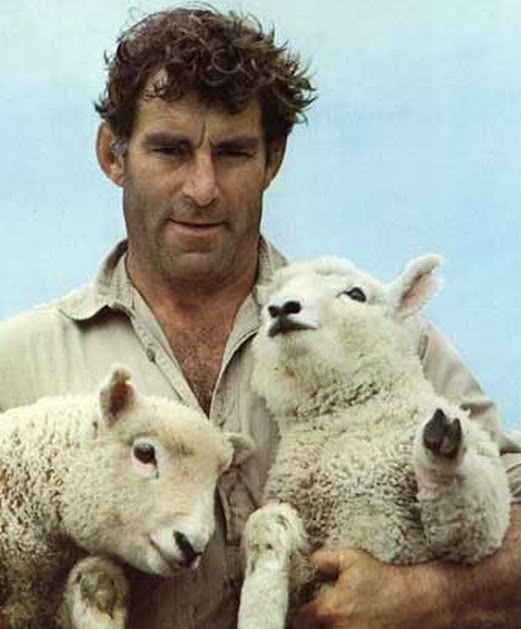
The lifestyle on his Te Kuiti farm, meanwhile, was relentlessly rugged. The legend of him running up and down hills with a sheep under each arm is a false part of rugby mythology, but he would spend long days at the dipping pen

As a schoolboy, I saw him play on Crisbrook for the All Blacks against Australia in 1964, South ASfrica in 1965 and the British Isles in 1966. Unfortunately for us young school boys in 1959, when they played the British Isles and Don Clarke's boot gave us an undeserved win by 18 to 17, Colin Meads for some reason, didn't play.  I was stunned watching Meads play on Carisbrook, and on TV, for the way he used his strength, skill and courage to dominate forward play. We stood in awe of Colin Meads

On June 3 every year, a group of otherwise sane and respectable middle-aged men in Dunedin will gather after work in a downtown pub dressed in All Black No 5 shirts. Some will also be wearing retro leather scrum caps, circa 1965, while all will be clutching a dog-eared book with messianic fervour.

The fan club of the man they call 'Pinetree' have celebrated the occasion devotedly since 1979.

Harmless fun in a rugby-mad country, but not without social significance. The faithful meet not only to honour the greatest All Black - he gained the title in a nationwide poll in 1999 - but to celebrate a different era and different values.

Meads played his first game for King Country team in 1955, at the age of 19. Scoring a try, and even a drop-goal (an unusual feat for a lock), Meads impressed in his debut match.

In 1955 Meads was selected for the New Zealand under 21 side which toured Ceylon (now Sri Lanka). He played all eight matches, scored three tries and was recognised by the Rugby Almanack as one of the 1955 season's most promising players. In 1956 Meads played in national trials and for the North Island, and in 1957 was selected for the tour of Australia. He played ten matches and made his test debut, playing both of the internationals against the Wallabies, scoring a try in the second. Although normally a lock, he played at flanker and number 8, and even wing (from where he scored a try), as the All Black team was strong on locks.


From 1957 until 1971 Meads was effectively an automatic All Black selection. The International Rugby Hall of Fame considers him to have been 'the most famous forward in world rugby throughout the 1960s'.[4] His strength and high threshold for pain became legendary — best illustrated when in a game against Eastern Transvaal in South Africa, in which he emerged from a particularly vicious ruck with his arm dangling horribly, with an obvious fracture, yet completed the match. When the doctor cut away his shirt and confirmed the break, Meads muttered, "At least we won the bloody game."

Meads had the reputation of being "an enforcer" and was involved in some controversial incidents. In 1967, he was sent off by Irish referee Kevin D. Kelleher for dangerous play against Scotland Murrayfield, and became only the second All Black suspended in a test match. The British Daily Telegraph newspaper said of the incident that 'For one with Meads' worldwide reputation for robust play, this was rather like sending a burglar to prison for a parking offence.' In Australia he is notorious for having ended the career of Ken Catchpole by pulling Catchpole's leg while he was pinned down, causing him serious injury.[6]

He captained the All Blacks a number of times - though never a regular captain, he holds the record[of longest period of captaincy (not consecutive games), from the first date (1960) he was appointed captain to the last match he captained (1971).

Colin Earl Meads was born to Vere Meads and Ida Meads (née Gray) on 3 June 1936, in the village of Cambridge in the Waikato region. His father Vere was a descendant of early settlers Joseph Meads and Ann Meads (née Coates), who emigrated to New Zealand from England in 1842. Vere’s grandfather Zachariah Meads was among the first British children to be born in Te Aro, Wellington, in 1843, and his grandmother Elizabeth Meads (née Lazare) was the daughter of an Irish minister who had educated freed slaves on the island of Mauritius before emigrating to Wanganui.

He and  his wife Vere raised their three children on a sheep farm near Te Kuiti. Meads credits the farming lifestyle for his strong physique and high level of fitness. Meads' brother Stanley Meads was also a noted rugby player, playing 30 matches as an All Black. In 11 matches Stanley and Colin locked the All Black scrum.

Last Saturday was "Old Timers" rugby reunion day inWellington and Barry Donovan told a great yarn about Colin "Pinetree" Meads, known in some more formal circles – but not in the King Country, I imagine – as Sir Colin.
The last time I spoke with Pinetree was at Melbourne Airport at the ridiculously early hour of 6.30am on the Sunday morning after the All Blacks thrashed the Wallabies the night before. I thought I recognised the rugged head and torso sitting behind me in the cafe and, as I'd played against him in one memorable game, went across and said: "Excuse me, but aren't you Colin Meads?"


The tough old campaigner lifted his gaze and – fortunately, for he could have said a number of things after a celebratory night – replied: "Yeah." So I quickly responded:


"Colin Meads – you're a legend!"

The last time I'd exchanged a few words with the living legend was after a game between a Wellington XV and the Meads-led King Country at Taumarunui in the mid 60s. The King Country crew were very annoyed that Wellington had not sent its No1 side but had sent basically a side consisting of promising younger players and a few old stagers.


The fired-up home team ran away with the first half and it was only during the second half that Wellington regained some respectability, but still lost.


But my biggest single memory of the game was when Pinetree took off from a lineout in the move that the world's inside backs feared most – a stampeding Colin Meads with ball in hand heading straight for you.


What does an 11-stone first-five do, apart from pray for survival and deliverance from any rugby gods favouring little blokes? I decided that rushing at Pinetree's knees head-on would be completely suicidal so instead I dived at the ground in front of him hoping the big bugger would trip over me somehow.


And it worked! As Meads half stumbled over a prostrate Donovan the other Wellington backs all climbed aboard him and yes – just like a falling pinetree – the King Country icon staggered a few more yards and fell – crash.


I FELT a little foolish after the game but went and shook hands with the mighty man in his changing shed where he kindly said that they had the fastest loose forward around but he still hadn't been able to get a hand on me. Thanks, Sir Colin.


Moving on to Sunday, August 1 last month at Melbourne Airport, Colin Meads and I had an engaging chat about the previous night's test match, which had included the controversial sending off of Wallabies' winger Drew Mitchell, reducing the home team to the absurd position of playing one short against the best rugby team in the world.


Naturally I had to refer to the "man of the match", All Blacks captain Richie McCaw, who had played yet another blinder and must be worth at least 10 points to his side through leadership by example alone. In some amazement, with a shaking of the head, Colin Meads replied that McCaw "just keeps getting faster".


Obviously there were memories of some of his 1960s comrades slowing down as time went by.


When talk turned to the unfortunate imbalance of 14 against 15, particularly in an international test match, and the regrettable rugby rule of a referee sending off a player for a second offence, my mind suddenly turned to another unforgettable rugby occasion where both Colin Meads and I had been involved.


It was late 1967 and the final UK test match against Scotland at Murrayfield. I was covering the game and providing a commentary for the newly established Dominion Sunday Times. Because of the time difference, I had to make a telephone call to Wellington at 2.30am, NZ time, and no later as the edition was ready to roll.


To make matters worse, all the phone lines in the Murrayfield press box had been taken up by the major British dailies and I had to arrange to make my call from a public box just outside the ground. The All Blacks established an early dominance and were never really threatened but the game was delayed occasionally and I was forced to head for the outside phone box with five minutes to go.


AS I approached the box a mighty roar went up from the Murrayfield crowd but I thought that even if Scotland had scored the All Blacks would still win. I rang straight through to Wellington and to my amazement the editor said: "What did Meads do? What did he do?"


"What did Meads do?" was my bewildered reply.


"Yeah, why did the ref send him off?"


Colin Meads was just the second All Black to be sent off in Britain after Cyril Brownlie in 1924 against England and I had been running to a bloody Scottish phone box and missed it! Good God!


A benevolent editor (Jack Kelleher) did accept my pathetic timing and public phone box excuse and allowed me to cover the All Blacks winning match against the Barbarians back in London which gave them the "grand slam" but it was one of those agonising newspaper reporting moments you definitely never want repeated.


Just as this unforgettable memory flashed through my mind, the Melbourne Airport waitress called out "two toasted sandwiches ready and waiting". Pinetree snapped to attention, mentioning that he was feeling slightly poorly after a big night, and some early morning tucker wouldn't go astray.


Standing up, the mighty Meads still looked as formidable as ever and you certainly wouldn't want to get between him and two toasted sandwiches. I forgot about Murrayfield, thanked him for his time, and left him to knock over breakfast.


Thanks to  Brendan Gallagher of the Telegrapgh, UK for some of his statitics and interviews he had with Colin and for the Dominion Post's permission to use excerpts from Barry Donovan's articl.