World Red Cross Day 2013
150 years ago, an ambitious idea became reality with the establishment of the ICRC and Relief Societies, known today as National Red Cross and Red Crescent Societies.
Sri Lanka Red Cross volunteers celebrate 150 years of Red Cross
Shortly afterwards, the first international treaty of modern humanitarian law was adopted.
To mark these cornerstones, we are highlighting the richness of our past and engaging in a global conversation about today’s humanitarian challenges and how to make a real difference for people affected by ongoing and emerging humanitarian crises.
In Sri Lanka we are marking the event by organizing a mini marathon and a fun run in the City of Matara on May 8, 2013 to highlight the work done by the Sri Lanka Red Cross , Under the guidance of Sri Lanka Red Cross Society Chairman Jagath Abeyasighe, in the years past. The event is organized in collaboration with the ICRC in Sri Lanka and the IFRC Sri Lanka Delegation.

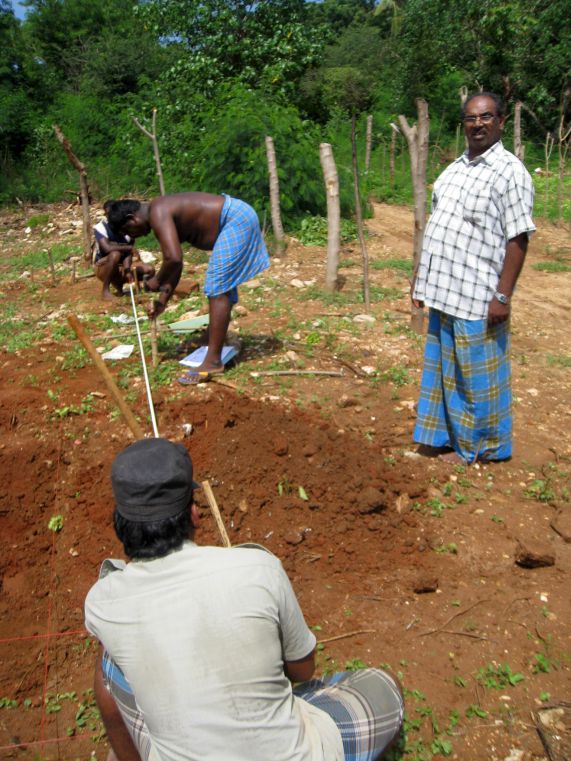
A SLRCS livelihood project in a village near Trincomalee includes micro-credit and many livelihood projects such as fish-drying projects, which has strengthen the community immeasurably.
Sri Lanka Red Cross Society (SLRCS) has an extensive network of volunteers and a branch in each of the 25 districts of the country. It has experience in community-based health activities including first, health promotion, blood donor recruitment and HIV/AIDS.
The role of Red Cross Red Crescent is to support and contribute to strengthen the linkage between communities and health services by facilitating contact when and if needed, provide essential health messages in remote and rural areas, conduct health prevention and promotion activities and to empower people to make informed decisions about their own health. It is to promote healthy life styles and encourage healthy practices and behavior the following diagram shows the relationship between Red Cross Red Crescent and Ministry of Health (including district health services), and the roles of each
SLRCS has been providing health services to the targeted communities through supply of water and sanitation facilities, promoting hygiene, improving psychosocial wellbeing and generating awareness on primary health care issues such as immunization, nutrition, family planning, communicable diseases and also special emphasis to the development of First Aid skills, blood donation camps/drives and HIV/AIDS Programmes.

Many partner national societies like the Japanese Red Cross have supported many community resilience projects. Photo: Bob McKerrow
SLRCS is working very closely with the vulnerable communities in establishing healthy living habits with special reference in bringing down the disease burden of non-communicable diseases. Emergency First Aid programme and provision of mobile health facilities in conflict affected areas and health in emergency programme is also initiated.
CBH is one of the key successful projects for SLRCS in the past covering 17 Districts. The other strong health Programme is the first aid Programme having an island wide coverage both in community first aid as well as general first aid.
HIV prevention project started in two districts covering mainly the neglected estate communities now after achieving its expected results it has expanding in to more districts and wider target groups. One of the key areas for the SLRCS is to strengthen its relationship with PLHIV networks.
First Aid activities are run by the SLRCS since its inception. Emergency First Aid (EFA) services were also initiated to provide prompt and effective First Aid services in conflict-affected districts. SLRCS is now in the process of establishing First aid teams to provide first aid services, rescue and evacuation support in times of emergency, internal violence, natural disasters and other emergencies. SLRCS have now its training curricula in general first aid trainings. SLRCS is in the process of adopting CBHFA new approach to all our community health projects in order to make this approach a success.
Standardized SLRCS is now rapidly scaling up its commercial first aid sector having a more dedicated team both at central and branch level, are also in the process of developing new materials to support this new initiatives.
SLRCS has now build up capacity in addressing psychosocial issues after completing a three year Programme in six Tsunami affected districts, and now planning to utilize the present capacity in conflict affected areas.
In future through its CBHFA programmes and IPA, SLRCS is looking forward to address the emerging health issues such as issues due to global warming, change of demographic pattern, and migration.

The objective of the disaster management programme of SLRCS is to improve community resilience to cope with and manage disasters while continuing to maintain organizational readiness to respond to natural and man made disasters. Overall DM programme focuses on two thematic areas i.e. institutional preparedness for disaster management and Community preparedness for disaster risk reduction. There are 5 types (components) of programmes are implemented under these 2 thematic areas namely institutional preparedness for response, community Based Disaster Risk Management, Early Warning systems, recovery, livelihood and development and development of skilled human resources and SLRCS has established training infrastructure.
The Red Cross Post Conflict Recovery Programme (RC – PCRP) in Sri Lanka has been implemented successfully with the SLRCS since April 2010, having a partnership with IFRC and other Red Cross Red Crescent Movement partners.
The programme contributes to the sustainable rehabilitation and reconstruction in the North of Sri Lanka, an area of the country, which remains in great need of development assistance. It primarily supports people who have been displaced due to the conflict and are now resettling.
The programme is an integrated IFRC intervention with overall coordination by IFRC, with the support of bilateral and multilateral partners. The aim is to build 20,000 houses for the people who are returning to the conflict zones.
From 13 July 2012 onwards, the RC PCRP entered a new partnership with the Government of India receiving funding for the repair of 2,800 and construction 14,000 new houses. Through this additional assistance 19,776 families will be provided shelter assistance based on the owner-driven approach utilising direct-beneficiary cash transfer mechanisms helping to empower beneficiaries and improve a sense of community ownership.

Since the inception of the programme, the Kilinochchi and Mulathivu branches of the SLRCS have been re-established, electing their governance and deploying key staff. The evolving RC PCRP has been able to attract youth and professionals of the area helping to re-establish a strong Red Cross volunteer network.
The adverse weather affected many districts in Sri Lanka from November 2010 to February 2011 resulting in mega scale catastrophe. Heavy torrential rain poured down causing floods and landslides shockingly almost all over the country. Initially, the damage was beyond to be assessed as it caused vast environmental and human devastation. The normalcy of the lives was overturned.
In response to this disaster, Sri Lanka Red Cross Society is currently supporting over 60, 000 people with following assistance mainly in Ampara, Anuradhapura, Batticaloa, Matale, Monaragala, Polonnaruwa, Trincomalee and Kegalle districts.
Distribution of 164 two-wheeled tractors (Sifang GN 12) and 1370 tool kits, as a livelihood support assisting 8200 families, through farmer organizations. Valued at LKR 60 million.
92 tractors have already been distributed. Arrangements to distribute another 72 tractors are in process. Shelter grant to 1,285 families (Rs.50, 000/=per family) to repair/rebuild houses. Valued at LKR 70 million
1285 families in all eight districts have received their shelter grants. Livelihood grant (Rs. 30,000 per family) to 2,800 families. In view of uplifting their living conditions, training in tools, equipment and services. Valued at LKR 84 million.
Livelihood grants were disbursed among 2799 families.
Restoring Family links is a core activity of SLRCS, designates by the SLRCS Constitution on Chapter 2 article 6. General objectives and tusks, notes SLRCS to Organize and explore a tracing service in peace time, in time of natural disaster and in case of conflict.
There are needs in our communities for this service.

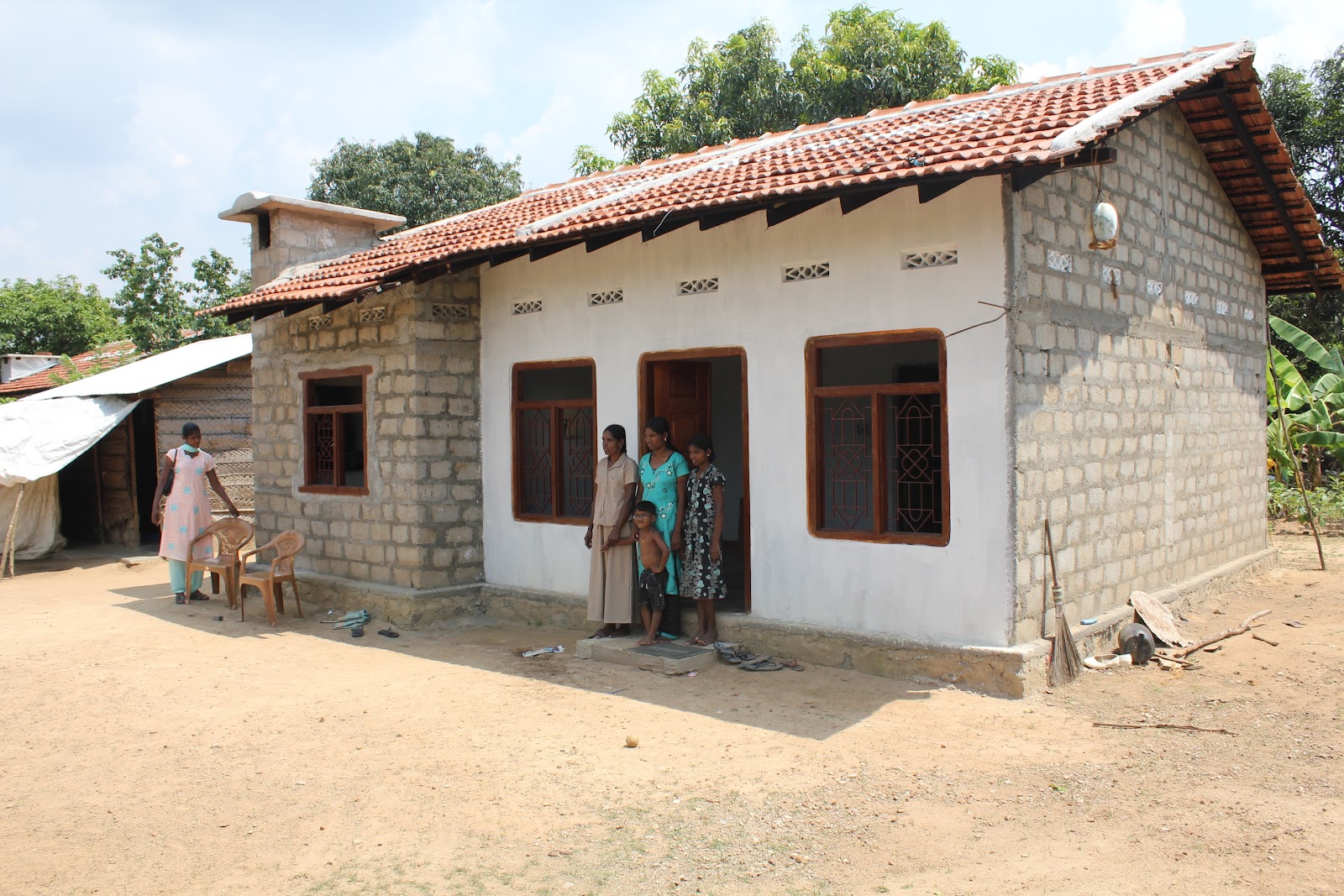
Auxillary to the Government, the Sri Lanka Red Cross has to work in a coordinated manner with the Government and diplomatic missions. Here is Tissa Abeywickrama DG of SLRCS with badge on left with Indian High Commissioner Ashok Kantha on his right and Minister for Economic Development, Basil Rajapaksa centre, at the launch of the Indian Housing project. The Indian Government is funding 43,000 owner-driven houses and Red Cross in an implementing partner for 16,800 houses.

One of the first houses completed under the Indian housing project in the North of sri Lanka. Photo: Bob McKerrow
The Geneva Conventions provide the legal basis for tracing and Red Cross Message services offered by the International Red Cross and Red Crescent Movement.
SLRCS is recognized by the Government of Sri Lanka as having a special role in Tracing and Family Reunion during times of disaster, specifically mentioned in the National Disaster Management Road map under Preparedness and Response Plans of the Emergency Response Networks.
The RFL Services are provided to conflict affected groups, to migrants workers and their family members, to people affected by natural disasters and particularly vulnerable people (children, the elderly and social cases). The SLRCS branches are joining their effort with the national headquarter to carry out activities of restoring family contact to these separated families.
SLRCS Tracing Service is member of the International Red Cross & Red Crescent tracing network and aims to restore family links for vulnerable families who have been separated due to migration, Disaster & conflict.
The tsunami that struck on the 26th December 2004 caused the worst disaster ever in Sri Lanka. The SLRCS and its volunteers, all over the affected districts, were among the first to provide immediate support and relief to victims. Due to the unprecedented magnitude of the catastrophe and the subsequent need to rebuild lives of tens of thousands of people, the SLRCS made a courage commitment to face the challenge. With the support of various RC/RC Movement partners, it rapidly scaled up its capacity to not only give back a home to the victims, but also rebuild their livelihoods in a sustainable manner.
During the project, the Sri Lanka Red Cross managed to rebuild 33,000 houses, 69 hospitals, 20 water and sanitation projects and 12 schools.
Article from Daily News May 8 2013. Photos added by Bob McKerrow IFRC.